Home / Courses

Courses and pricing

Three beginner-friendly courses, all taught at the bench with live interpretation. Prices are per student and include every tool, movement and consumable you will use. Accommodation is included from the four-week course onwards.

Intermediate

Watch Repair — Intermediate

2 weeks · 60 teaching hours · Monday to Saturday

Theory first, then tools, then hands. You learn what every tool in the tray does and how to keep it true, then strap and case work, quartz fault finding, jewel and battery replacement, and the polishing and brushing that make a watch look new again.

  • Watch theory, and the full tool kit: what each tool does and how to true it
  • Strap removal, case opening, sealing and refitting
  • Quartz: battery change, fault finding, servicing and jewel replacement
  • Polishing, brushing and refinishing of cases and bracelets
  • Goal: service most mechanical and quartz watches, and open your own shop
$1,590 per student · accommodation from around $12 a night

2weeks
60teaching hours
What you cover, week by week
  • Week 1 — Tools and safety, quartz and battery movements
  • Week 2 — Mechanical basics: strip-down and re-assembly

Most popular
$2,890 per student · accommodation included

4weeks
130teaching hours
What you cover, week by week
  • Week 3 — Automatic movements, cleaning and lubrication
  • Week 4 — Escapement, regulation, timegrapher, water resistance
Advanced

Watch Repair — Advanced

4 weeks · 130 teaching hours · Monday to Saturday

Everything in the intermediate course, plus three of the hardest movements in the trade.

  • Everything in the intermediate course
  • 2894 chronograph — the hardest of the chronographs, the line between a fitter and a watchmaker
  • Rolex 4130 chronograph — the calibre inside the Daytona
  • Chinese tourbillon — one of the three great complications
  • You finish able to take in chronographs and tourbillons, not just three-hand watches

Advanced + Lathe

Advanced + Watchmaker's Lathe

6 weeks · 190 teaching hours · Monday to Saturday

Everything in the advanced course, plus the lathe — the tool that lets you make the part instead of hunting for it.

  • Everything in the advanced course
  • Lathe setup, maintenance and safe turning
  • Turning balance staffs, screws and winding stems
  • Cutting gears, cannon pinions, crown wheels and pallet fork staffs
  • For vintage and high-value watches where the part simply cannot be bought
$3,980 per student · accommodation included

6weeks
190teaching hours
What you cover, week by week
  • Week 5 — Chronographs and date complications
  • Week 6 — Vintage calibres, parts sourcing, workshop setup
The full syllabus

Every hands-on skill you practise

This is not a list of subjects we talk about. Each line is something you do at the bench, and the two-week course covers all twenty-one of them.

  • Adjusting and shortening a bracelet
  • Pressing in jewels
  • Fitting the pallet stones to the lever
  • Changing the automatic bearing on the 3135, 2892 and 2894
  • Stripping a complete watch down and building it back up
  • Quartz fault finding
  • Water-resistance testing on two kinds of equipment
  • Removing and fitting the mainspring
  • Pressing in a crystal
  • Replacing a balance
  • Truing and polishing tweezers and screwdrivers
  • Hairspring work: levelling and truing the coil
  • Opening a case back and refitting it
  • Cutting pegwood, and lapping a jewel to bring amplitude back up
  • Polishing and brushing cases and bracelets, with the safety guarding that goes with it
  • Setting shock-absorber axial clearance, and changing jewels on the jewel press
  • Heat-bluing screws
  • Waterproofing with sealant oil and grease
  • The adhesives and pastes: 609, rocket glue, UV cure, silicone grease
  • The watch washing machine
  • The timegrapher, and what its traces are telling you

The two-week course covers every skill on this list at the bench. The four-week course adds the hardest movements, which are listed with the calibres below. The six-week course adds making the parts yourself on the watchmaker's lathe - the reason we teach it is that on a rare watch, or a vintage one, there is often no piece to buy.

Movements and finishing

The calibres and finishing you will work on

You start on the simplest movement there is and work up to chronographs, a coaxial escapement and a tourbillon.

Intermediate course

Chinese standard movement Mechanical basics
Quartz 2035 Quartz basics
Quartz 2115 A second quartz calibre
ETA quartz Swiss quartz calibres
ETA 2824 The Swiss workhorse
ETA 2836 Day and date automatic
ETA 2892 Slim automatic
Citizen 8200 Common in Chinese brands
Citizen 6T51 Ladies' automatic
Seiko NH35 Common in Chinese brands
Rolex 3135 High-end automatic
Omega 2500 Coaxial escapement
7750 The chronograph calibre
Case finishing Polishing, brushing, refinishing

Advanced course adds

2894 Advanced chronograph
Rolex 4130 Rolex chronograph
Chinese tourbillon One of the three great complications
Side by side

Three levels. Start wherever suits you.

Course Duration Teaching hours Tuition Accommodation
Watch Repair — Intermediate 2 weeks 60 $1,590 Around $12 a night
Watch Repair — Advanced 4 weeks 130 $2,890 Included
Advanced + Watchmaker's Lathe 6 weeks 190 $3,980 Included

Prices are per student in US dollars. Accommodation is included free of charge on the four-week and six-week courses; students on the two-week course can book a room from around $12 per night, depending on the room. Payment plans are available on request.

Not finished when the course ends? The bench stays yours.

If you reach the end of your course and something we taught still will not come out under your hands, keep training at no extra charge. There is no second fee, no re-enrolment, and for that extra time we arrange your room and charge nothing for it either. What we cannot control is how long the immigration authorities let you stay in China - that is set by your visa, not by us. So tell us at the start how much time you have, and we will plan the course around it.

Inside the workshop

What the training actually looks like

Every course runs at a real bench, on real movements, with an instructor beside you.
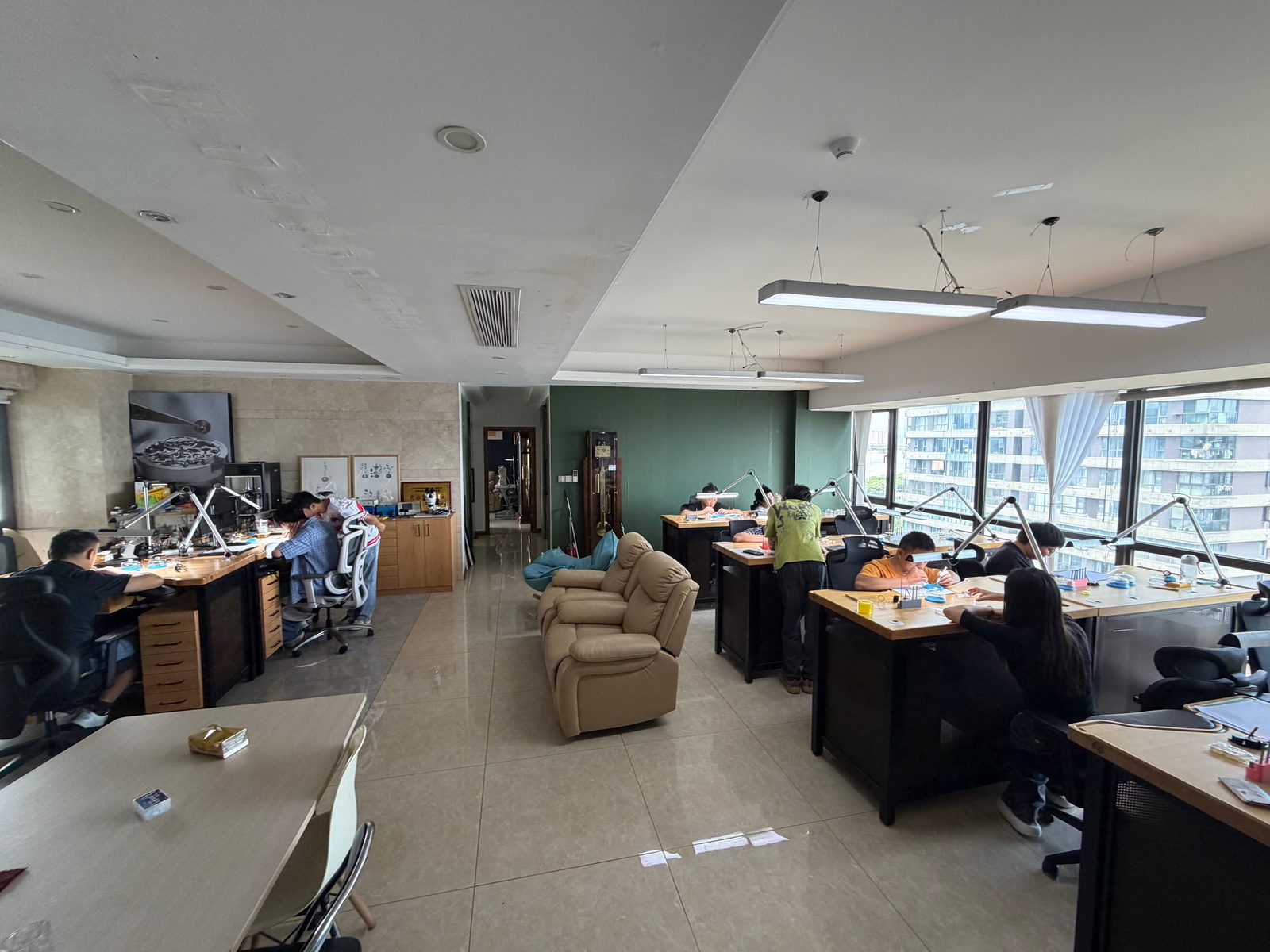
The training floor, with students working at benches on both sides under task lamps
The training floor
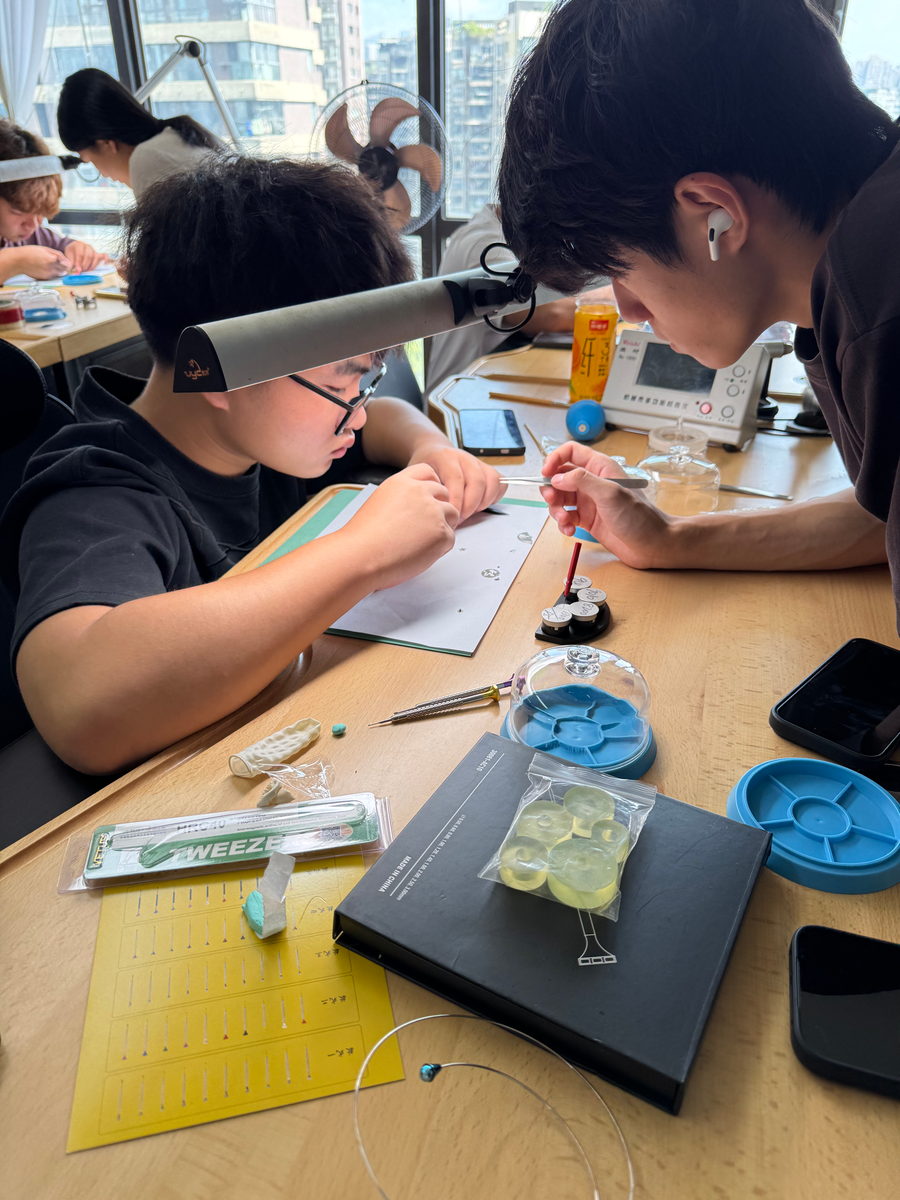
Two students at a bench, one wearing a headband magnifier and working on a watch with tweezers
Watch movements at the bench
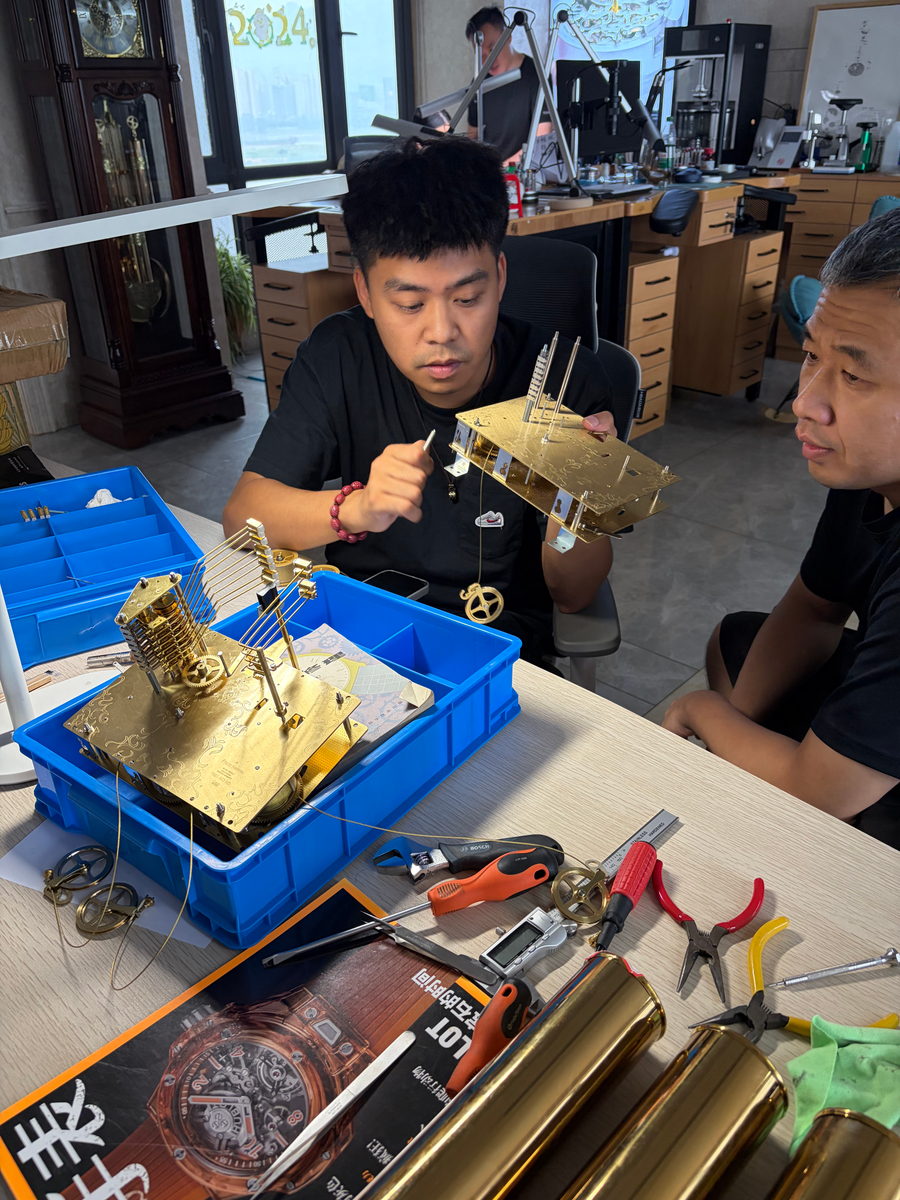
A student holding up a brass clock movement beside a tray of parts and hand tools
Clock movements
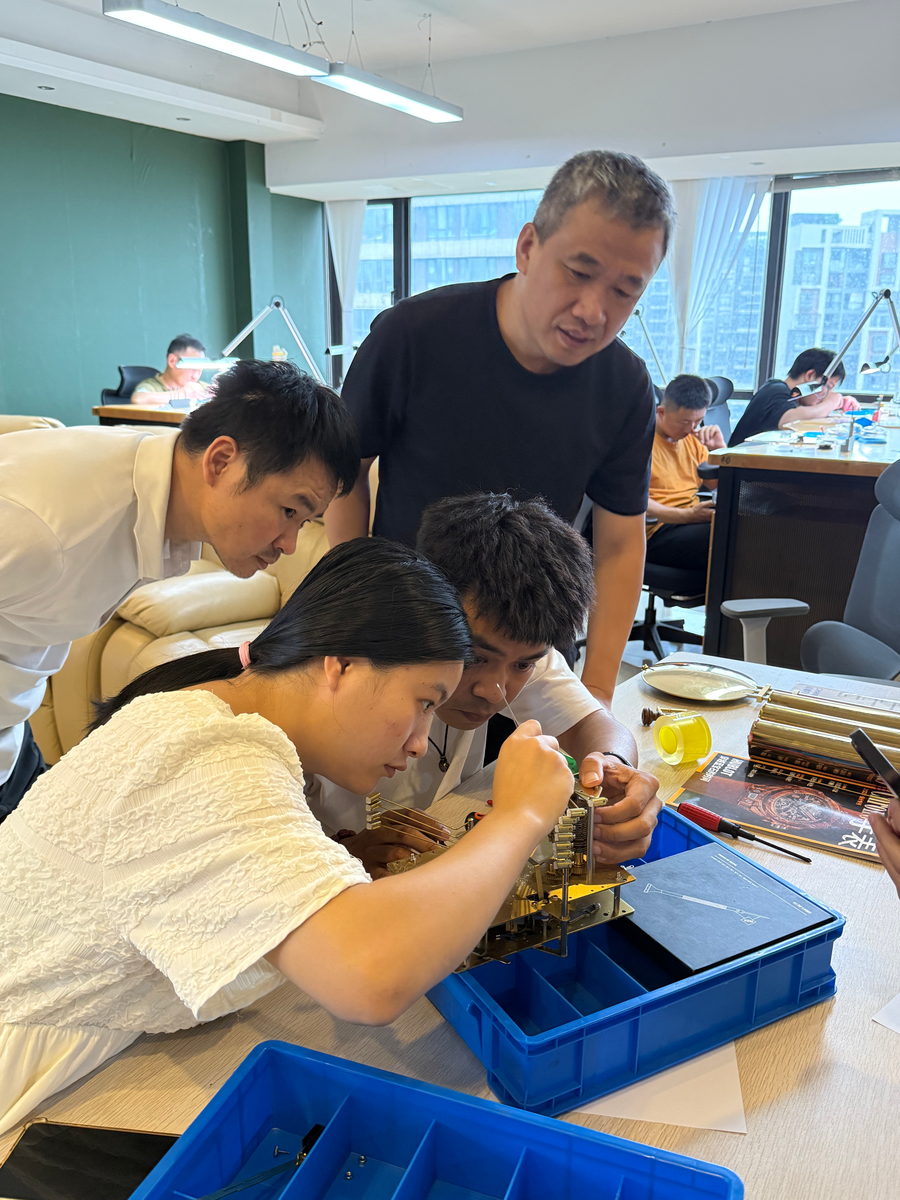
An instructor leaning over a student's shoulder to correct his work on a clock movement
One-to-one at the bench
Training environment

Where you actually train

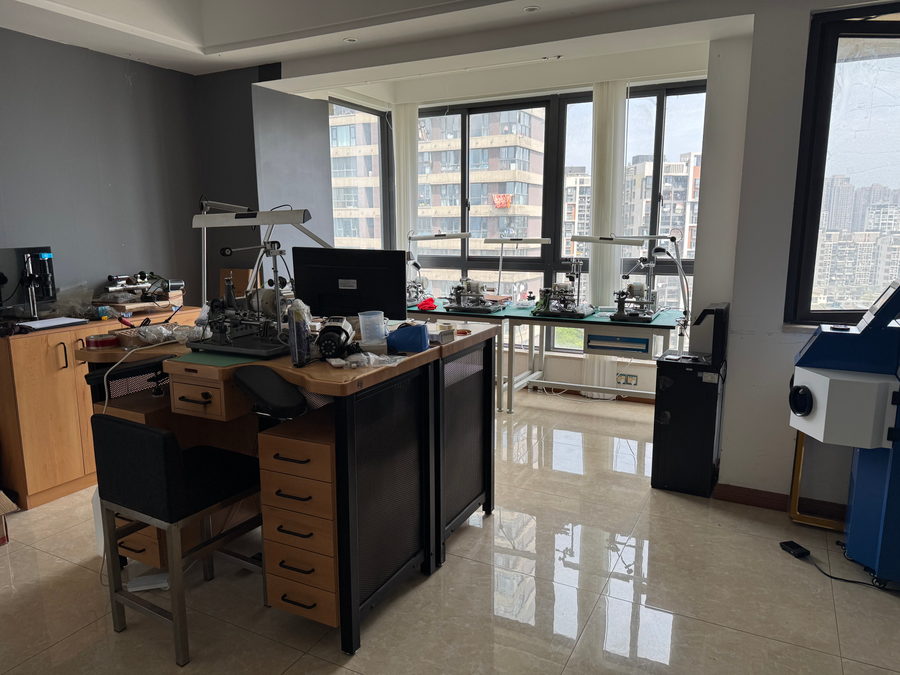
One floor, benches down both sides, and the instruments the work needs. This is the room you will spend your weeks in.
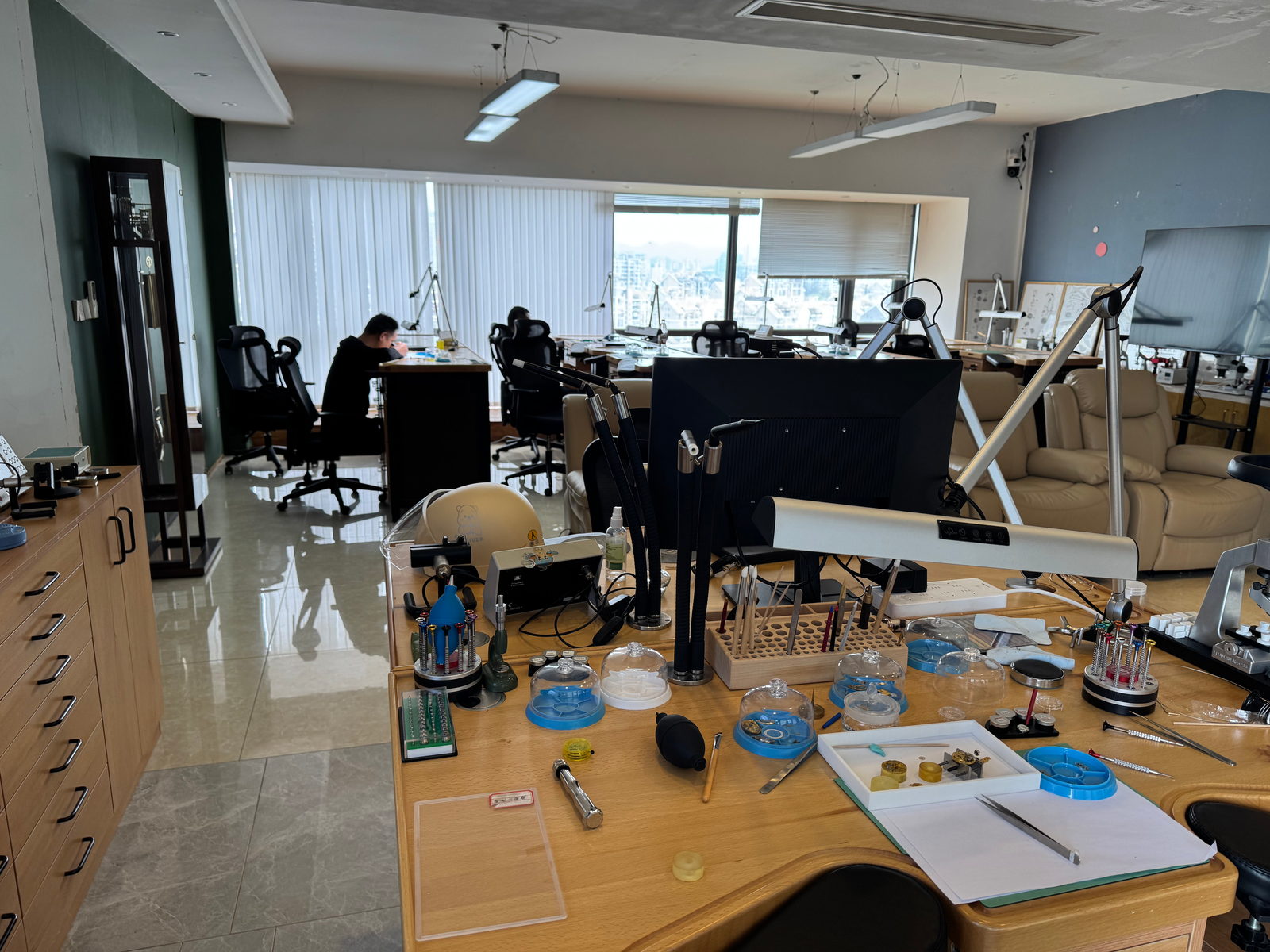
A bench seen from above and laid out with screwdrivers, tweezers, glass dishes and movement trays, with students working at windowside benches behind
The bench, laid out ready to work
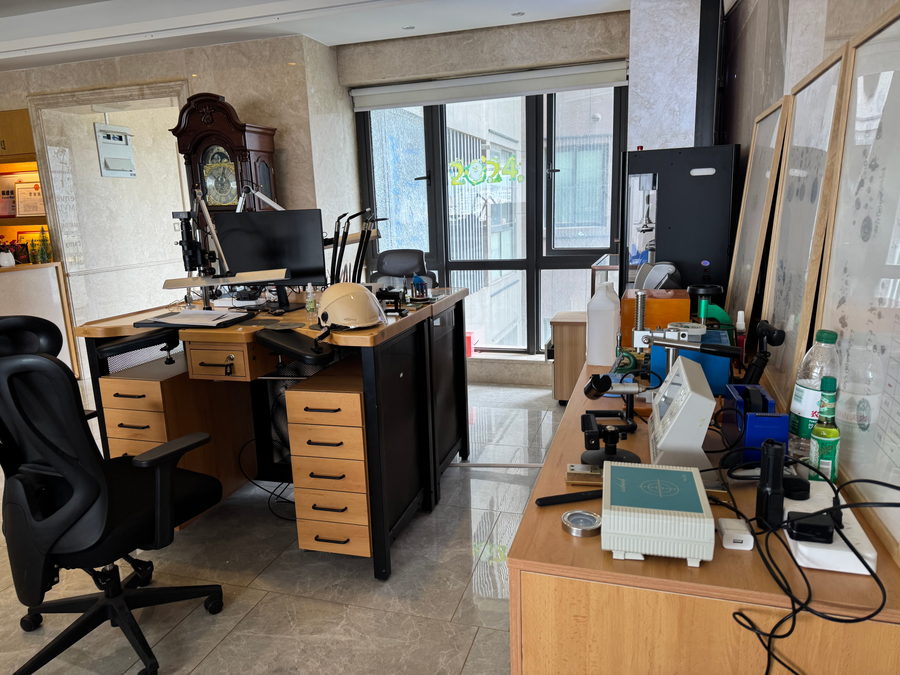
A workstation with a magnifier lamp, drawers and hand tools, and a grandfather clock behind
Your workstation
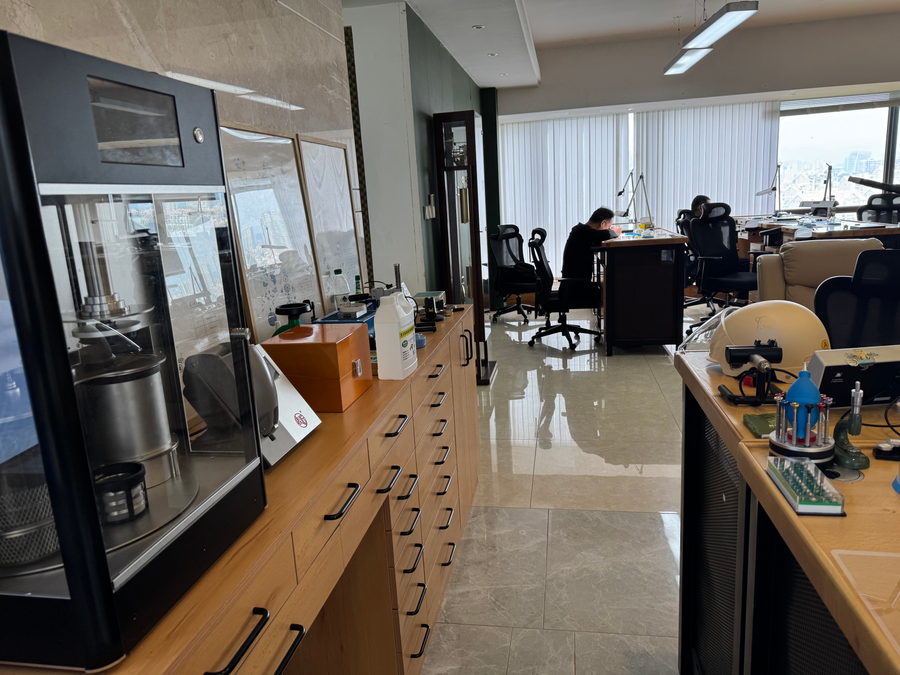
Wooden parts cabinets and a glass display case along the wall
Parts cabinets and display case
Benches under task lamps beside floor-to-ceiling windows looking out over the city
Windows over the city

The instruments

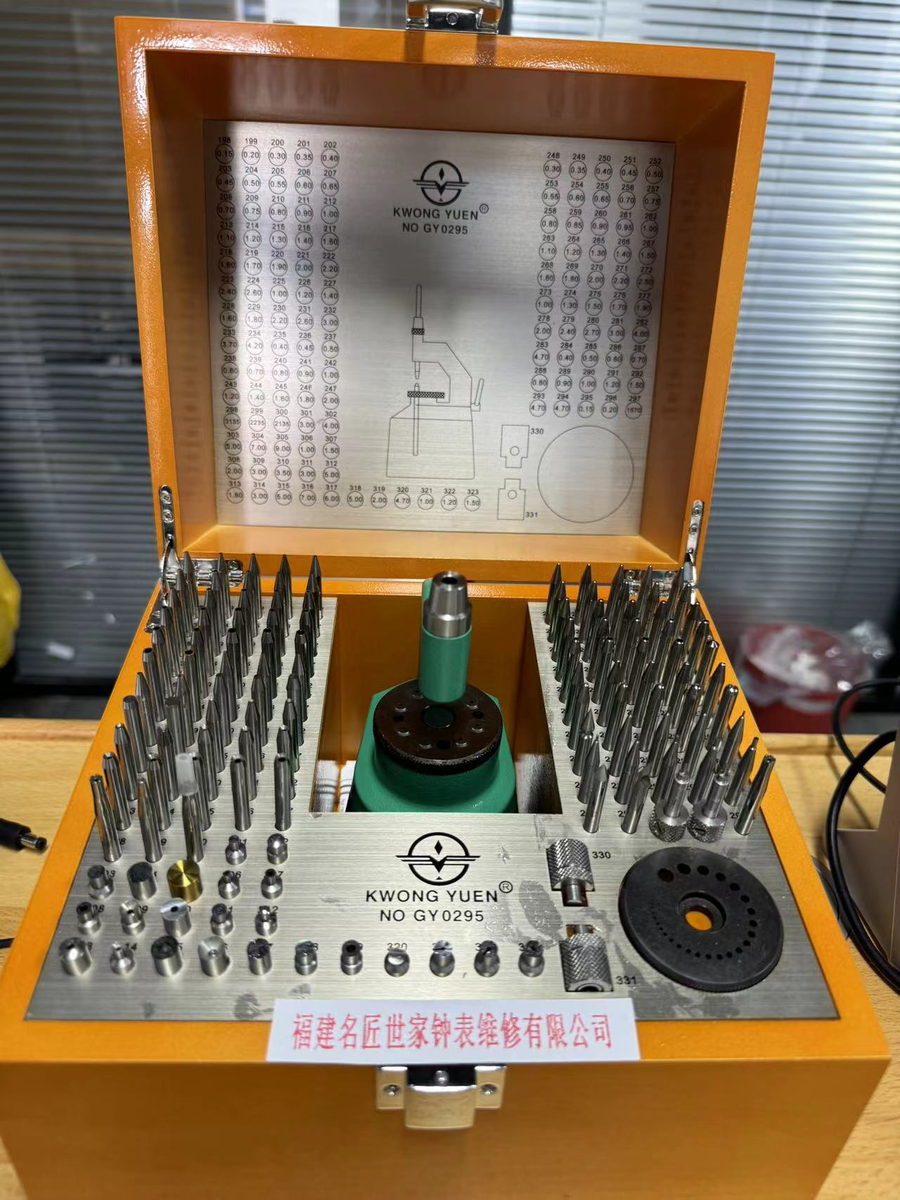
An open wooden case holding a complete watchmaker's tool set: screwdrivers, tweezers and a movement holder
A full watchmaker's tool set
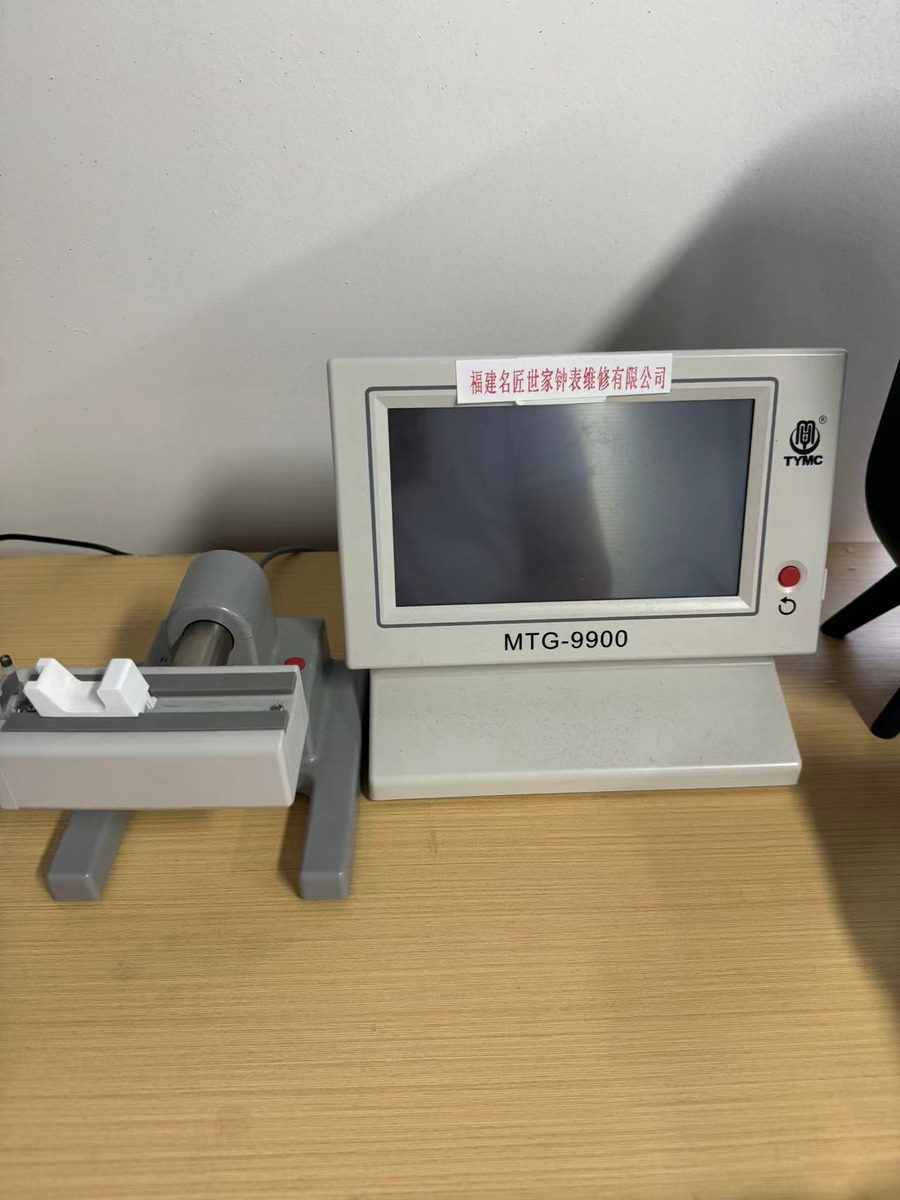
The timing machine used to read a watch's rate and beat error
Timing machine
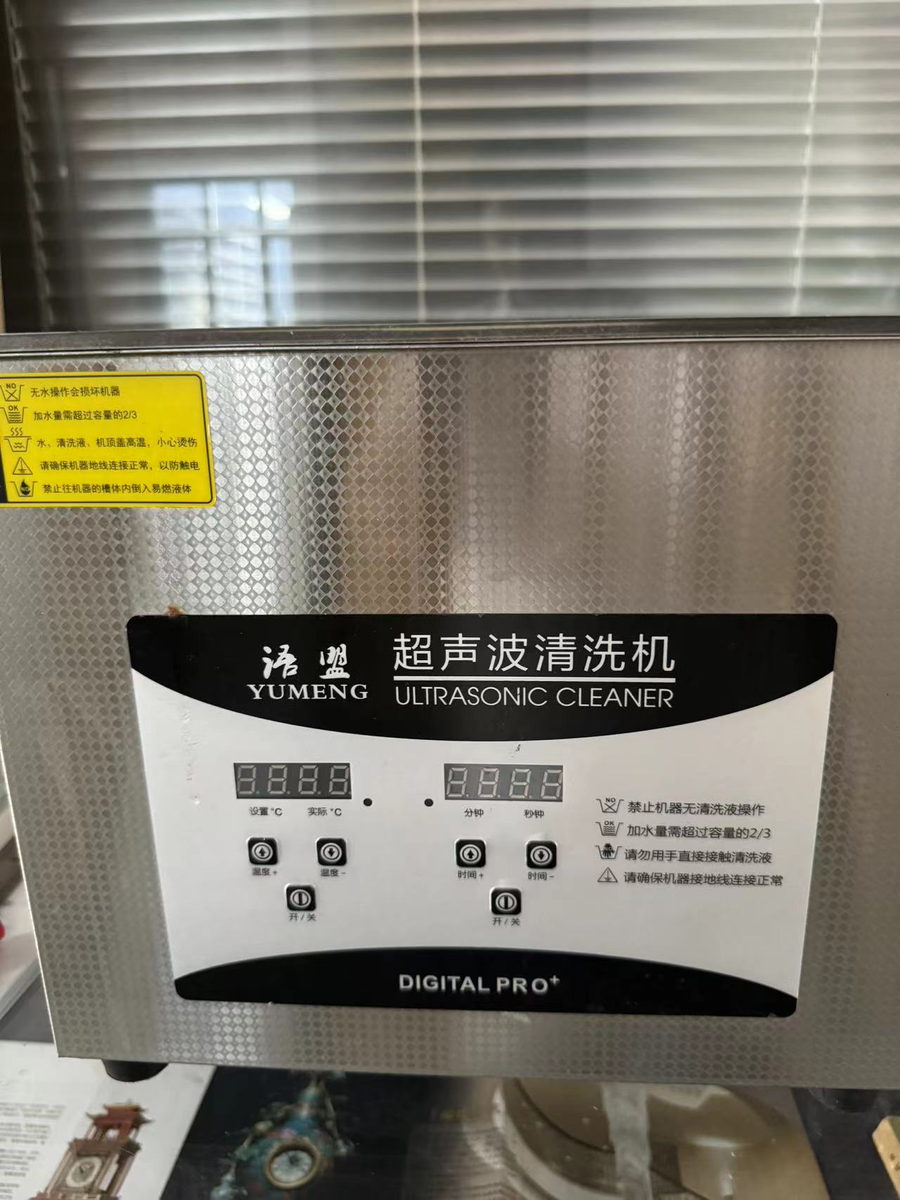
The ultrasonic cleaner used to clean movements and cases
Ultrasonic cleaner
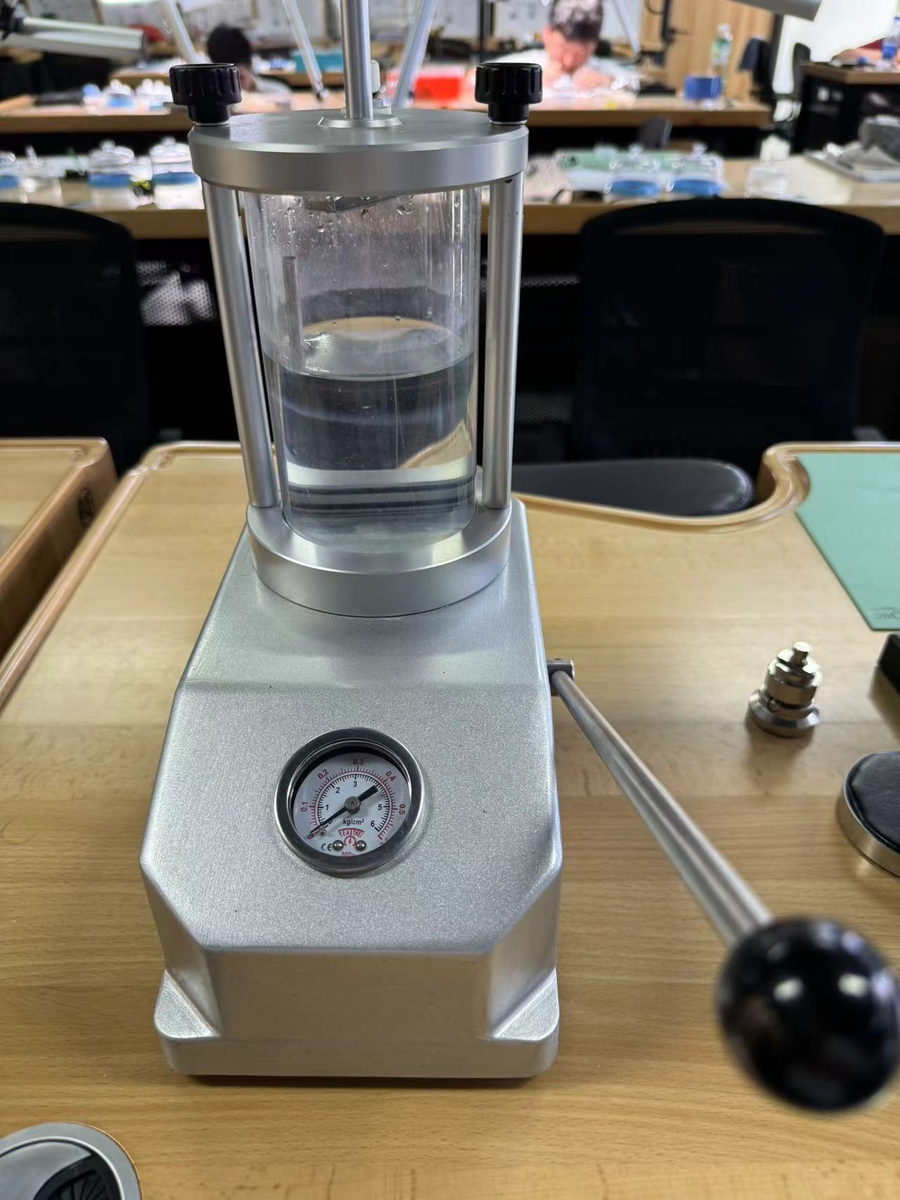
The water-resistance tester used to pressure-test a watch case
Water-resistance tester
Watchmaker's lathe

Turning your own parts

Part of the six-week course: the motor-driven bench lathe.
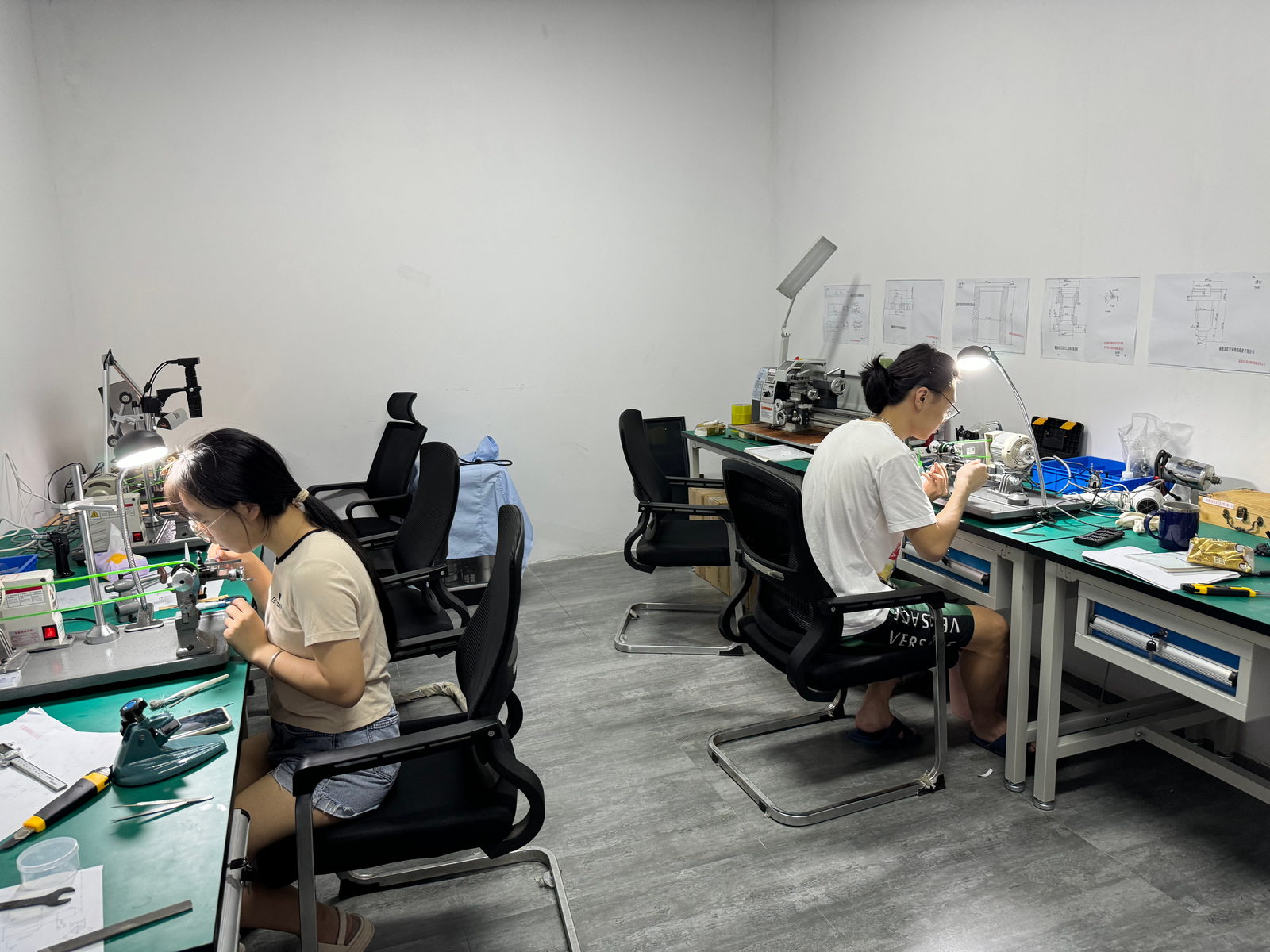
Two students at separate benches in the lathe room, each at a motor-driven lathe under a bench lamp, technical drawings on the back wall
The lathe room
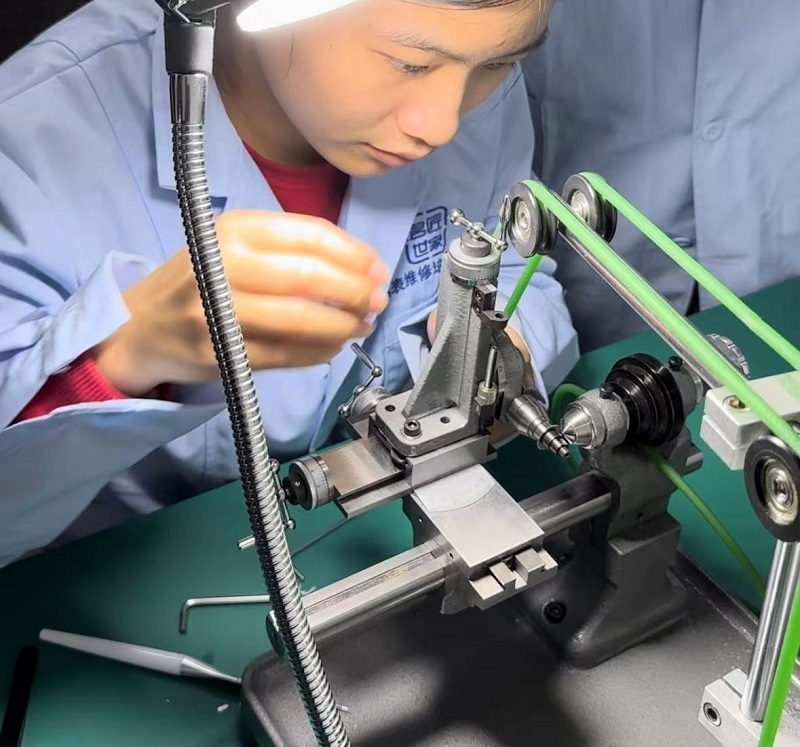
A student in the school's blue workshop coat leaning over a watchmaker's lathe, the green drive belt running past the headstock
A student at the lathe
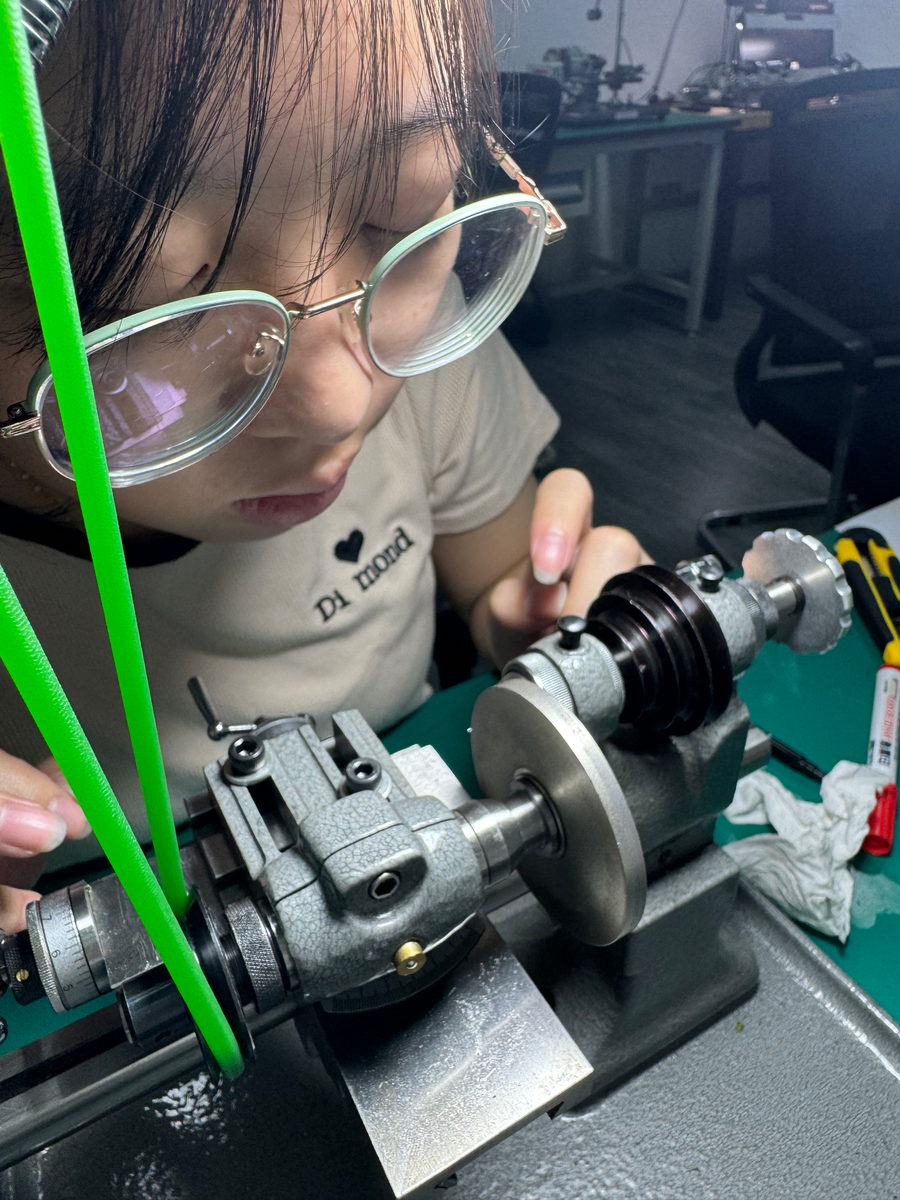
A student in glasses leaning in over the lathe, the green drive belt crossing the frame, the headstock and chuck in focus
Close work
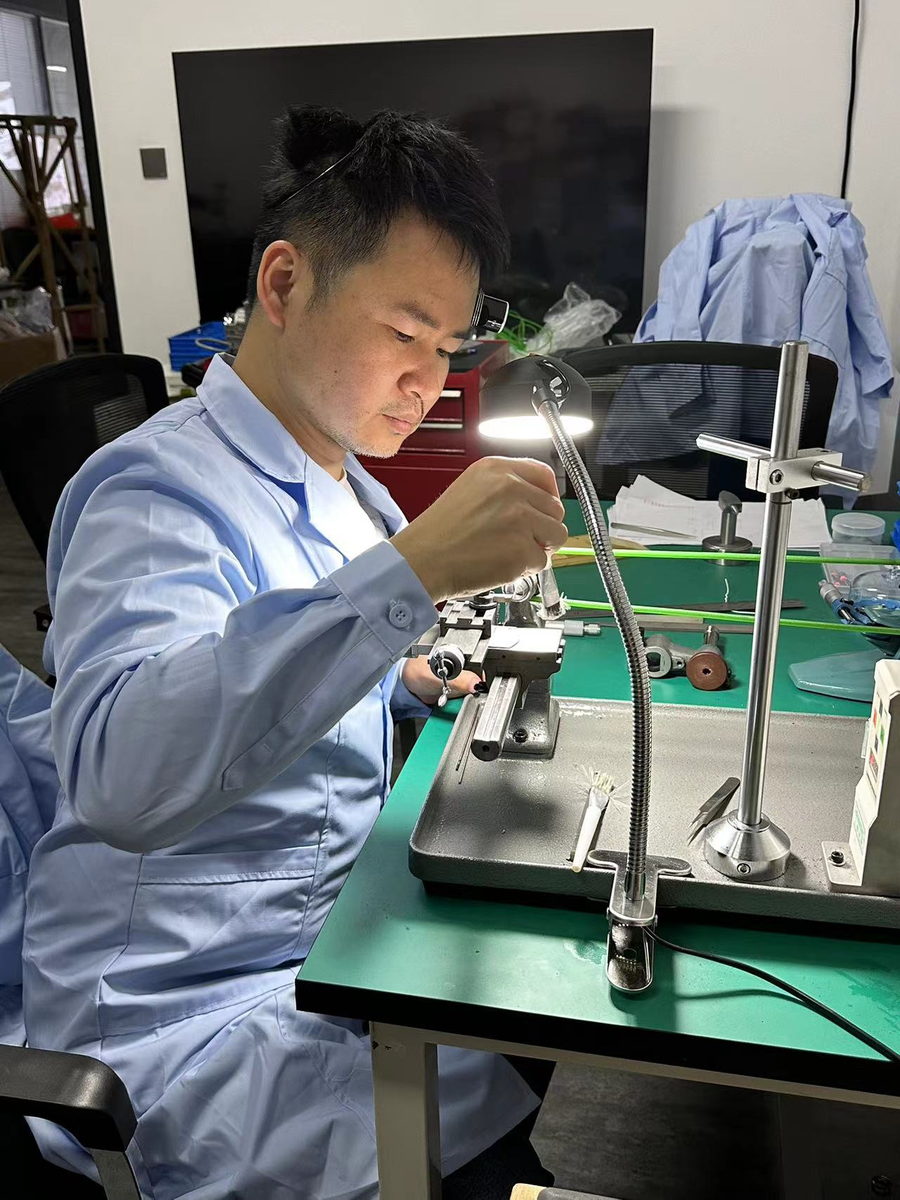
A technician in a blue workshop coat and headband magnifier working at a lathe under a bench lamp, a tray of tools beside him
Under the bench lamp

Included in every course

  • Full bench access, six days a week
  • Complete professional tool set at your bench
  • All practice movements, spare parts and consumables
  • Printed course manual with bilingual step-by-step notes
  • Timegrapher and water-resistance testing
  • Certificate and portfolio photographs

Not included

  • Flights and travel insurance
  • Visa application fees
  • Accommodation and meals
  • Personal tools to take home after the course

Peak months are March, April, September and October. Book six to eight weeks ahead if you plan to travel then, so that your visa has time to be processed.

Start dates

Start dates

Courses begin most Mondays throughout the year. Tell us your preferred month in the enquiry form and we will confirm availability the same working day.

What you cover, week by week

  • Week 1 — Tools and safety, quartz and battery movements
  • Week 2 — Mechanical basics: strip-down and re-assembly
  • Week 3 — Automatic movements, cleaning and lubrication
  • Week 4 — Escapement, regulation, timegrapher, water resistance
  • Week 5 — Chronographs and date complications
  • Week 6 — Vintage calibres, parts sourcing, workshop setup

Your bench is waiting

Tell us your dates and we will hold a place for you. No payment is needed to reserve a bench for fourteen days.

We reply to every enquiry within 24 hours.